Business Transformation
Business diagnostics, transformation roadmaps, operating models, organisation restructuring, process redesign and change programmes.

BUSINESS TRANSFORMATION & MANAGEMENT CONSULTING
Strategy. Systems. People. Execution.
ScaleNine Advisory works with founders and family-owned businesses to bring greater structure, accountability and execution into the way the business operates — without losing the entrepreneurial spirit that made it successful.
A QUESTION WORTH ASKING
Growth often exposes gaps that were invisible when the business was smaller. The founder becomes the decision point. Processes depend on individuals. Teams are busy, but accountability is unclear. Sales increase, but profit does not follow.
WHAT WE DO
Every business reaches a point where the way it has been working is no longer enough.
We work with family-run businesses, MSMEs and early-stage start-ups to understand what is holding the business back, define what needs to change and work alongside the owner and team to make those changes happen.
Business diagnostics, transformation roadmaps, operating models, organisation restructuring, process redesign and change programmes.
Organisation structures, role clarity, KRAs/KPIs, performance systems, leadership, manpower planning and talent strategy.
Process mapping, SOPs, workflow redesign, responsibility matrices, controls, 5S and continuous improvement.
Business goals, WIGs, lead and lag indicators, sales performance, dashboards, reviews and accountability.
Turn important business priorities into executable projects with WBS, milestones, dependencies, governance, risk tracking and weekly reviews.
Business-side ERP/CRM requirements, process-to-system mapping, vendor evaluation, implementation governance and adoption.
Leadership, senior management and specialist hiring — a supporting capability when transformation requires the right people.
WHO WE HELP
HOW WE WORK
We start by understanding how your business works today — the processes, people, systems and challenges. We then bring clarity to where you want to go and build a practical roadmap to get there.
But the work doesn't stop with the plan. We work alongside your team to implement the changes, establish new ways of working, set up review mechanisms and measure progress. As the business evolves, we help you course-correct and keep moving towards the goal.
Our approach is simple: Understand. Diagnose. Prioritise. Implement. Measure. Institutionalise.
CASE STUDIES
FROM FRAGMENTED OPERATIONS TO A STRUCTURED MANAGEMENT SYSTEM
A growing manufacturing business had reached a stage where the way it was being managed needed to evolve.
Decision-making was still relatively person-dependent, issues were often addressed reactively, and planning across Sales, Production, Procurement and other functions was not yet working as one integrated management system.
Sales was largely reviewed as an outcome rather than through the drivers behind it. Production planning was largely manual. Quality was more focused on inspection than prevention, and performance management was primarily centred around the annual appraisal cycle.
The business had people working hard across functions, but needed greater structure, visibility, accountability and a consistent management rhythm.
The first phase was focused on building the management operating system — creating the structures, processes and review mechanisms needed to make the business more organised and less dependent on individual intervention.
The organisation structure was redesigned and reporting relationships were clarified. Roles and responsibilities were made clearer, creating the foundation for stronger accountability and delegation. An AOP framework was also established.
Key end-to-end processes were mapped, particularly: Order → Planning → Procurement → Production → Dispatch. This provided visibility into how activities connected across functions and where better coordination was required.
Weekly Sales and Factory reviews were established with dashboards and an action-oriented approach. Instead of management conversations being driven only by what had already happened, lead indicators were introduced to help focus attention on the factors that could influence future performance.
Sales & Operations Planning (S&OP) was introduced to bring demand, material availability, production capacity, inventory and dispatch into a common management conversation. This created the foundation for Sales and Factory teams to work from one agreed view of demand and supply rather than operating independently.
Quality management was moved beyond inspection towards process control. IQC and IPQC practices were strengthened, FPI was implemented, and complaint RCA/CAPA practices were initiated. Quality KPIs were incorporated into the weekly dashboard.
A Performance Management System was completed, with manager scorecards introduced through the weekly dashboard. The direction shifted from an annual appraisal-focused approach towards: Goals → Lead indicators → Weekly reviews → Performance → Improvement.
5S implementation was initiated, providing the foundation for greater workplace discipline, ownership and visual management.
A purchase SOP and vendor evaluation framework were designed, while material planning and inventory controls were aligned towards the ERP implementation. The objective was to eventually move from manual follow-up towards reliable, data-driven planning and management.
| Earlier | Direction established |
|---|---|
| Person-dependent decisions | Clearer organisation structure and reporting |
| Reactive issue solving | Process mapping and weekly review cadence |
| Sales viewed mainly as an outcome | Sales dashboard and lead indicators |
| Sales and Factory could operate separately | S&OP brought them together |
| Quality focused on inspection | Process control, RCA/CAPA and quality measures |
| Planning largely manual | MSL and ERP-enabled planning model established |
| Annual appraisal as the main performance mechanism | PMS and weekly scorecards |
| 5S not institutionalised | 5S implementation initiated |
The first six months established the foundation for a more structured management system.
Most importantly, the business began moving from individual effort and reactive management towards defined processes, shared information, accountability and a regular management rhythm.
The next phase is not about creating more frameworks.
It is about making the system work consistently.
The focus is on embedding the review rhythm, converting process maps and policies into everyday SOPs and practices, making ERP deliver operational control, strengthening distributor productivity and sales execution, improving quality, completing the HR foundation and eventually transferring ownership of the management systems to the internal team.
SCALENINE BLOG
When founder involvement becomes a constraint rather than a strength.
Read article →Why growth requires a shift from doing to designing the organisation.
Read article →More headcount cannot compensate for unclear roles and weak systems.
Read article →The signals that tell you informal management has reached its limit.
Read article →Good documentation is not the same as a working process.
Read article →A practical approach to ownership, milestones, dependencies and reviews.
Read article →ABOUT SCALENINE
I founded ScaleNine to help businesses turn their goals into better ways of working — and better results.
I bring more than three decades of experience across Business Re-Engineering, Business Operations, Technology Implementation, Quality and Management. I spent most of my corporate career with 3M, Tata Teleservices and Tata Sky, working on business-critical initiatives that involved building processes, improving performance and making organisations work better.
I received multiple awards and recognitions, for my contributions to Business Improvements. Over the years, I have developed a strong combination of strategic thinking, analytical problem-solving, process improvement and hands-on implementation. I am a Six Sigma Black Belt, hold an MBA from Bangalore University, and my Belbin profile identifies me strongly as a Plant and Implementer — someone who develops practical solutions and makes things happen.
That is also how I work with my clients. I don't just recommend what should change. I work alongside the owner and team to make the change happen.
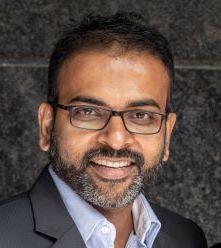
FOUNDER & MANAGEMENT CONSULTANT
MBA from Bangalore University · Six Sigma Black Belt
Business transformation, operations, process improvement and hands-on implementation.
“I don't just recommend what should change. I work alongside the owner and team to make the change happen.”
FREQUENTLY ASKED QUESTIONS
Most entrepreneurs have a vision for their business. They know where they want to go and what they want to achieve. Where businesses often struggle is in turning that vision into a clear plan and consistently executing it.
We work with business owners and their teams to bridge that gap — by putting the right priorities, people, processes, systems and management mechanisms in place to turn business goals into results.
We work with MSMEs, family-run businesses and early-stage start-ups, typically with an annual turnover of up to ₹100 crore.
Our clients may be at different stages, but they usually have something in common: the business has the potential to do more, and the way it is currently structured or managed needs to evolve to support the next stage.
We work across manufacturing, trading, services and technology businesses.
The bigger question is: Is your business ready for tomorrow?
As an entrepreneur, you may be able to manage today’s business successfully. But as the business grows, what worked earlier may not continue to work.
ScaleNine helps you identify what needs to change today so that the business is better prepared for tomorrow.
We work closely with you and your management team.
We start by understanding your vision and goals for the business — where you want to take it over the next 1, 3 or 5 years.
We then look at how the business currently works across people, processes and systems, identify the gaps and determine what needs to change.
From there, we create a practical roadmap and work with you and your team to implement the required changes.
The objective is not simply to produce a plan. It is to make the plan work in the business.
Our engagements are for a minimum of six months because meaningful organisational change takes time to implement and embed.
We typically work with the business once a week, while remaining actively involved between reviews wherever required.
Our involvement can span strategy, planning, implementation, performance reviews, problem-solving and course correction.
We work like a part of your team — alongside the owner and management team, as well as employees at different levels of the organisation.
Our approach is:
Understand → Define → Build & Implement → Review & Improve
Implementation is one of our key strengths.
We certainly help with strategy and advise on what needs to change. But our involvement doesn’t stop with a recommendation.
We work with the team to convert decisions into plans, plans into actions and actions into established ways of working.
We then review progress, identify gaps and help course-correct where necessary.
We don’t just tell you what needs to change. We help you change it.
We work across Manufacturing, Trading, Services and Technology.
Our approach is not based on applying the same solution to every business. We first understand how your business works, the challenges you face and where you want to go, and then determine what needs to change.
Our engagements have a minimum duration of six months.
The actual duration depends on the nature and scale of the changes required.
After the initial six months, we review the progress made, the level of internal ownership and the business’s continuing requirements. Based on this, the engagement may be extended or the business may transition to managing the systems independently.
Yes.
Our work starts with the business owner because the owner’s vision, priorities and expectations are central to the engagement.
At the same time, implementation cannot happen through the owner alone.
We therefore work closely with the management team and employees at different levels, depending on what needs to be implemented.
This allows changes to become part of the organisation rather than remaining dependent on the owner or consultant.
Yes.
Human Resource Management is one of our core service areas, and recruitment is an important part of it.
We also have a separate recruitment division that can support larger or specialised hiring requirements.
Depending on what you need, we can support you with the complete recruitment process or simply assist with defining the role and assessing/interviewing candidates.
Yes.
While our work is hands-on and we prefer to work closely with the business, we are open to working with businesses outside Bangalore.
The extent of on-site and remote involvement can be discussed based on the nature of the engagement and what the business requires.
We understand that business owners are already busy running their businesses.
We therefore try to make your involvement focused and purposeful.
We will need your time to understand the business, clarify priorities, take key decisions and review progress. The objective, however, is not to create another set of meetings for you.
As the systems and management rhythm become established, greater ownership should move to the management team.
There is no single type of problem that triggers an engagement.
We help you understand what is really getting in the way and what needs to change first.
The results depend on the starting point and the objectives of the engagement.
Typically, the focus is on creating:
The ultimate objective is to create a business that is better organised, more productive and better prepared for its next stage.
ScaleNine combines elements of management consulting and hands-on implementation, but our role is different from simply giving advice or taking over day-to-day management.
We help you understand the business, determine what needs to change, create the roadmap and work alongside your team to implement it.
We don’t take over your business.
You remain the owner and decision-maker. We help you build the structure, systems and ways of working that enable the business to perform better.
Simply call, WhatsApp or send us an enquiry.
We will have an initial conversation to understand your business, where you want to go and what challenges you are facing.
There is no charge for the initial discussion and no obligation to proceed.
LET'S TALK
Tell us what is happening. We’ll take it from there.
Based in Bangalore, India, working with businesses across locations.